Introduction
Making the right business decisions has never been easy. Leaders must balance data, experience, time pressure, and uncertainty. As markets move faster and competition increases, businesses need better ways to understand situations before making important choices.
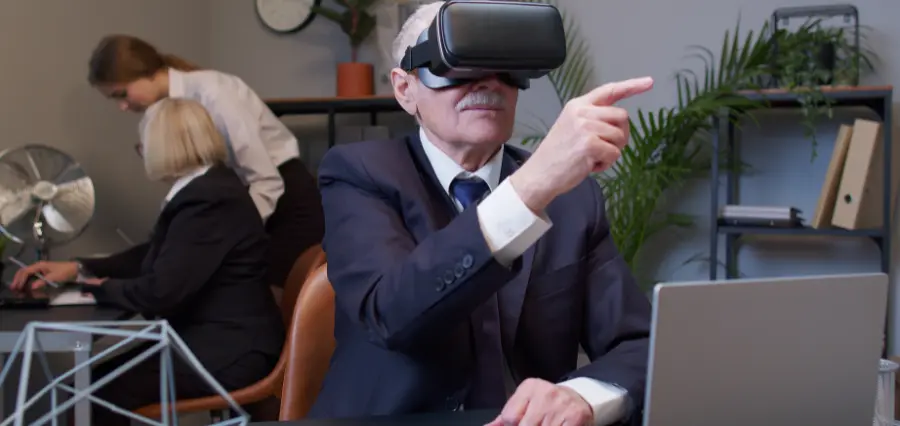
This is where Augmented Reality (AR) and Virtual Reality (VR) are starting to make a difference. These technologies are not only about visuals or entertainment. When used correctly, they help leaders see problems more clearly, test ideas safely, and make smarter decisions.
This article explains how AR and VR can support better business decision-making in a practical and human way.
Understanding AR and VR in Simple Words
Augmented Reality adds digital information to the real world. For example, seeing product details or data on a screen while viewing a real object.
Virtual Reality creates a fully digital environment where users can explore situations as if they were real.
Both tools help people understand information through experience rather than just numbers or text.
Seeing Business Problems More Clearly
Many business decisions fail because leaders do not see the full picture. Reports and charts can only explain so much.
AR and VR allow leaders to visualize scenarios. They can explore layouts, processes, or customer journeys before committing resources. This clarity reduces guesswork and builds confidence.
When leaders see situations clearly, decisions become more thoughtful.
Testing Ideas Before Taking Risks
Every decision carries risk. AR and VR allow businesses to test ideas in a controlled environment.
Leaders can simulate changes, explore outcomes, and identify problems early. This reduces costly mistakes and improves planning.
Testing before acting saves time, money, and reputation.
Supporting Faster and Better Team Decisions
Decision-making is rarely done alone. Teams must align, discuss, and agree.
AR and VR help teams understand ideas quickly and equally. Instead of long explanations, teams can experience the same information together.
This leads to faster discussions, clearer feedback, and stronger agreement.
Improving Customer-Focused Decisions
Understanding customers is key to smart decisions. AR and VR help leaders view products and services from the customer’s perspective.
This insight improves decisions related to design, communication, and experience. Leaders can make choices that truly meet customer needs.
Customer-focused decisions build long-term trust.
Benefits of Using AR/VR for Decision-Making
Using AR and VR offers several advantages:
- Better understanding of complex situations
- Reduced risk through testing and simulation
- Faster team alignment and collaboration
- Improved customer insight
- More confident leadership decisions
These benefits help leaders act with clarity and purpose.
Practical Use Without Complexity
AR and VR do not need to be complicated or expensive. Many businesses start small, using simple tools for planning or training.
The focus should always be on value, not technology. When AR and VR solve real problems, they become powerful tools.
Simple use leads to real impact.
Why Business Leaders Should Pay Attention
The future of decision-making is visual and experiential. Leaders who use AR and VR gain an advantage by understanding situations more deeply.
Ignoring these tools may limit insight and slow progress.
Smart leaders explore new ways to think and decide.
Conclusion
AR and VR are changing how business leaders make decisions. By turning information into experience, they reduce uncertainty and improve clarity.
These tools support smarter thinking, better planning, and stronger leadership. When decisions are informed by experience, businesses move forward with confidence.
AR and VR are not the future of decision-making—they are becoming part of the present.