
The Perils of Screen Time: Exploring Parenting Concerns in Toy Story 5
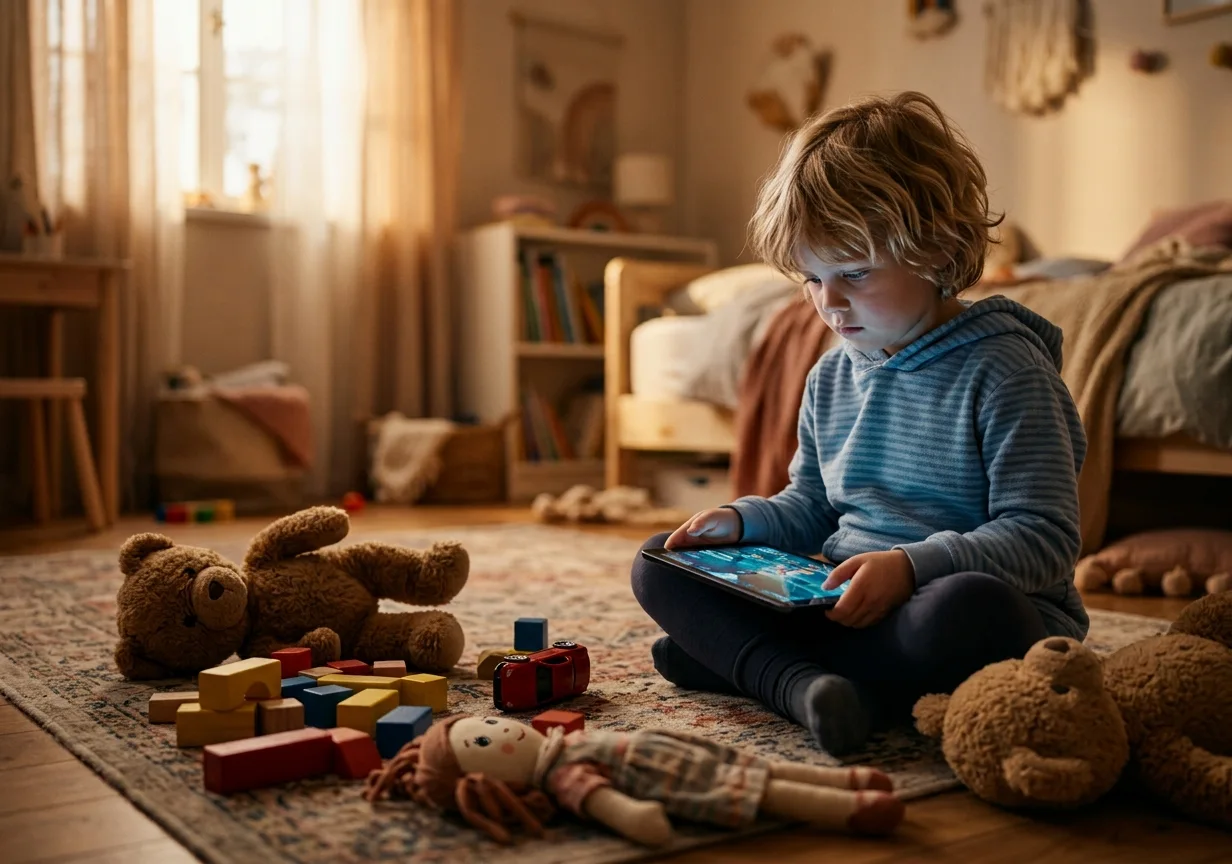
Pixar released Toy Story 5 and the entire world collectively sighed knowing what was coming. We were all steeling ourselves for a roller coaster of emotions… what we didn’t expect was for the true villain of the story...
Pixar released Toy Story 5 and the entire world collectively sighed knowing what was coming. We were all steeling ourselves for a roller coaster of emotions… what we didn’t expect was for the true villain of the story to be screen time. Toy Story slayed once again with its choice of evil-doer, not picking the obvious toy collector, business tycoon, or jealous adversary but something far more sinister and relatable: screen time. From tablets raising our babies to algorithms designing our children’s childhoods and smartphones vying for their attention at dinner, Pixar managed to perfectly reflect modern culture with its villain. Toy Story 5 premiering in 2026 has landed at a time where parents are navigating children and technology like never before and are fighting more than ever for their children’s attention. Learn more about why screen time is parents’ biggest fear, how villains in children’s movies help us process real world fears, and why screen time is such a battleground for parents today.
A New Kind of Villain for a New Generation
Pixar released Toy Story 5 and the entire world collectively sighed knowing what was coming. We were all steeling ourselves for a roller coaster of emotions… what we didn’t expect was for the true villain of the story to be screen time. Toy Story slayed once again with its choice of evil-doer, not picking the obvious toy collector, business tycoon, or jealous adversary but something far more sinister and relatable: screen time. From tablets raising our babies to algorithms designing our children’s childhoods and smartphones vying for their attention at dinner, Pixar managed to perfectly reflect modern culture with its villain. Toy Story 5 premiering in 2026 has landed at a time where parents are navigating children and technology like never before and are fighting more than ever for their children’s attention.
Learn more about why screen time is parents’ biggest fear, how villains in children’s movies help us process real world fears, and why screen time is such a battleground for parents today.
Pixar’s Legacy of Symbolic Villains
Pixar villains have always doubled as symbols. Sid Phillips represented the fear that Woody and the gang had of being thrown away in Toy Story; Lotso from Toy Story 3 reflected the fear of abandonment and child cruelty found in orphanages everywhere. Pixar villains have become more sophisticated as time went on, showing deeper, relatable fears that adults themselves could sympathize with. Automated Robotics Corporation, or AUTO, portrayed mankind's fear of technology becoming too advanced in WALL-E. Charles Muntz symbolized what happens when one lives and breathes one thing their whole life. Even Syndrome from The Incredibles was portrayed sympathetically to children at one point before growing a god complex and trying to destroy everything Bob Parr had worked for. But in Toy Story 5, Pixar has outdone itself with their depiction of what could very well be the scariest villain of all: progress. In a world dominated by social media and smartphone addiction, who cares about old-fashioned toys? There's an entire universe of games, jokes and interactive stories that pleases children beyond what a pull-string cowboy or talking spaceman can do. Pixar is commenting on modern society with its newest villain, and it just might be its most metaphorical depiction to date.
Enter ScreenVerse: The Digital Playground
In the near-future year of 2026, technology has become so ingrained in family life that parents may barely recall what childhood was like before it. Robots in homes respond to children's voices before parents even know they've been called. Hyper-efficient AI education rob children of human connection. Toy gadgets mix reality with CGI in both wondrous and terrifying ways. Apps track children's sleep cycles, diet, mood, and screen-time WHILE IT'S HAPPENING, ironically depriving parents from being in the moment with their children the very thing kids NEED most. As such, Toy Story 5's man-vs.-tech villain isn't one you, but rather an all-encompassing digital playground called 'ScreenVerse' that represents all the apps, videos, games, and screens vying for your kids' attention RIGHT NOW. Pixar reportedly did their research; talking to parents, psychologists, and wellness specialists about parenting in order to strike a nerve with parents watching the film with hand-knives...uhh, smartphones at their sides.
Why Children’s Stories Need Villains
Movies for kids have always needed villains. Mischief needs must be personified outside of parents' laps if children are to confront their anxieties about the world around them. The evil queen. The conniving magician. The corporate raider bent on world domination: they all offer young audiences safe spaces to learn that yes, the world can be scary, but love and friendship will save the day. Toy Story 5's subversion is that there is no need for a villain hiding outside the nursery window when there is one right there in the houseplant, on the coffee table, in bed with them, in their hand. Parents today need villains too, though we're less likely to find them lurking under the bed and more likely to discover them nestled between us and our children's hearts. Thank you, John Lasseter and company, for having the guts not only to dip a toe into the water like The Emoji Movie and Ralph Breaks the Internet did last year but to dive headfirst into branding our kids as cynical screenagers. You craft this film's powerful villain screens themselves into such a loveable, kaleidoscopically colorful creature that you and your viewers will never feel lectured to. Which is exactly why he's a villain.
Parenting in the Age of Algorithms
Parenting today is parenting in limbo. Parents are expected to raise kids in a world that parents of yesteryear didn’t know existed; one where kids learning and entertainment industries intentionally overlap, big tech purposely uses behavioral psychology to addict even their youngest consumers, and parents feel an immense need to give their kids every technological advantage while also knowing that increased screen time has proven detriments. Toy Story 5 empathetically comments on this modern-day conundrum with Bonnie’s mother, a woman who isn’t portrayed as an evil-tech-iconophobic person but rather someone who is doing her best. During one busy afternoon, ScreenVerse becomes Bonnie’s mother’s digital outlet, but slowly takes over Bonnie’s life. Bonnie’s mom isn’t portrayed as a villain mom, and Toy Story 5 doesn’t shame parents for falling prey to what our world has become. The difficulties of parenting in the 21st century aren’t because we don’t love our children or don’t have good intentions, they’re because there are no good systems in place.
The Science Behind Screen Time Concerns
Studies about screen time have become more complex as years pass. Initial research suggested a simple concept: too much screen time causes children to have delayed language skills, shorter attention spans, disrupted sleep patterns, and lower social abilities.
Newer studies factor in differences between good vs. bad content, parental interaction during screen time, and screen time allowances. However, one thing that hasn't changed is how detrimental brain-hooking algorithm driven infinite-scroll apps and sites can be for a young child's brain. ScreenVerse from Toy Story 5 conceptually represents these types of screens. Children's brains are hardwired to be more vulnerable to dopamine hits. Websites and apps that purposefully manipulate these hits can become addictive and replace time spent playing, exercising, and socializing with others IRL. Toy Story 5 understands this concept and effectively turns it into a conflict that the toys can fight; they aren't fighting obsolescence with a keyboard and mouse, they're fighting it with dolls that play imaginatively and run around.
The Psychology of an Effective Villain
Pixar’s villains are effective because they’re persuasive. Most successful animated villains aren’t evil just to be evil. They’re evil because they have something to offer that’s actually desirable. Ursula offers strength and beauty. Scar offers fate and family. ScreenVerse offers stimulation with zero effort and infinite variety. On a psychological level, that’s why our collective digital addictions are so hard to resist: it feels good. Digital binging eliminates boredom. It calms anxiety. It provides instant reward. Pixar’s braintrust has designed ScreenVerse to look beautiful, feel empathetic, and be impossible to demonize outright. Kind of like the smartphones it’s tangentially villainizing. Psychologists agree that the best tools for teaching kids media literacy are ones that allow them to recognize when they’re being manipulated with zero shame attached. Toy Story 5 exists squarely in this therapeutic nexus.
By externalizing and embodying the allure of everything vying for our children’s attention, Pixar has given kids the language they need to process what they’re feeling but can’t yet fully comprehend.
A Cultural Reflection for Modern Families
Toy Story 5 is more than a nostalgic reunion with beloved characters it is Pixar's most culturally urgent film to date. By casting screen time as its villain, the studio has done what it has always done best: transformed a complex, uncomfortable societal conversation into something a five-year-old and a forty-year-old can experience together and leave the theater changed by. In 2026, when parenting feels like an endless negotiation with algorithms, when childhood is curated by recommendation engines, and when imagination must compete with infinite digital stimulation, Toy Story 5 arrives as both a warning and an invitation. The toys are still there. The magic of unscripted play still exists. But it requires parents and children to choose it, consciously and repeatedly, in a world designed to make that choice as difficult as possible. Pixar has never shied away from making audiences cry this time, they may also make us put down our phones.