
FinTech Definition & Examples (Examples of How FinTech Works)
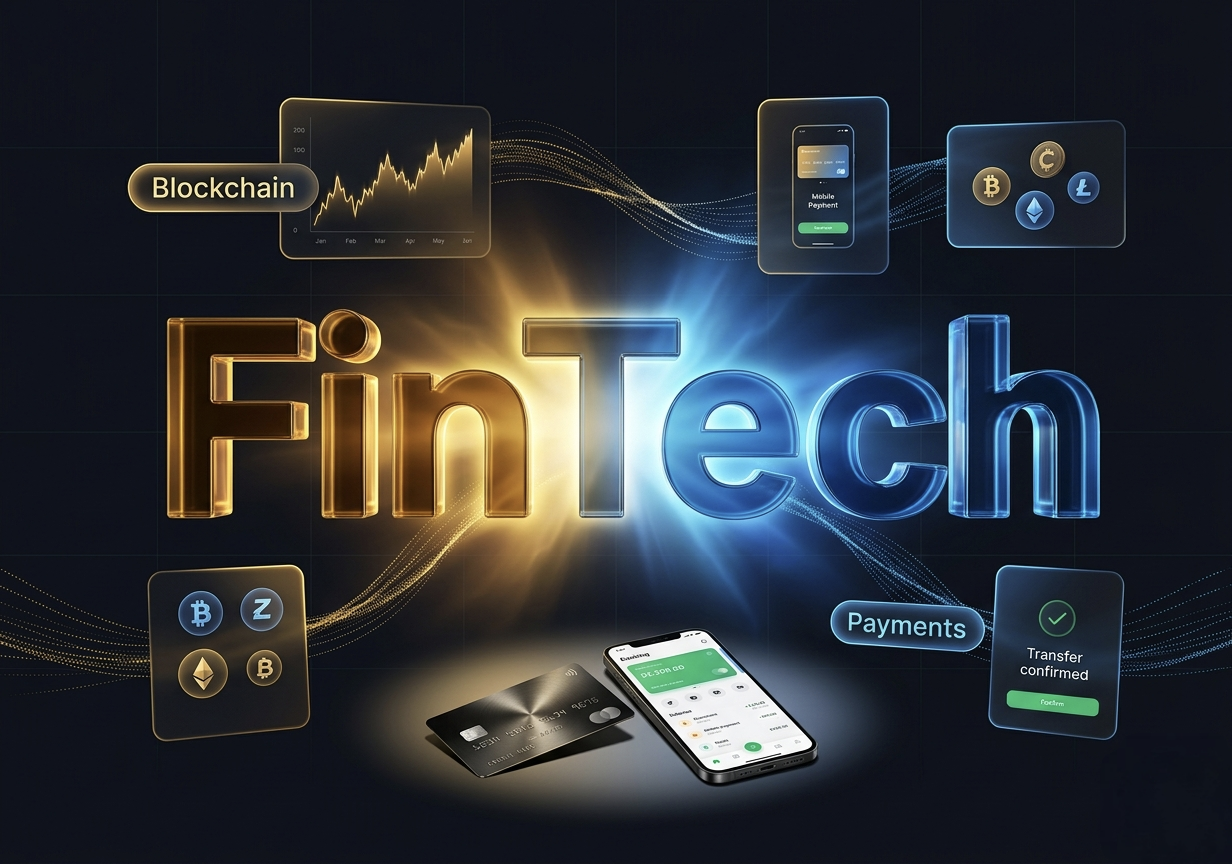
A simple guide to FinTech explaining what it is, how it works, and real-world examples of financial technology in action, including digital payments, online banking, lending platforms, and investment apps.
The financial industry has been revolutionized over the last few years. Technology, innovation, and customer expectations have transformed banking and financial services. Now everything is about technology. This change has been dubbed; "FinTech." But what does FinTech mean? Well, don't let the funny name confuse you. FinTech literally means bringing technology to financial services. It's the use of software, algorithms, and connectivity to change how we use, move, save, or spend money. Mobile banking, digital wallets, contactless cards, Bitcoin, and paying bills with your phone are all examples of FinTech. Financial Technology (FinTech) makes our money easier to manage, faster to move, and more convenient to spend. If you've used an app or an internet service to manage your money, you've used FinTech.
1. Everyday Examples of FinTech
Examples of FinTech that we use in our everyday lives include:
Mobile Checking Accounts: Online banks such as Chime provide bank accounts that are entirely mobile managed. There are no physical branches. You can open an account, deposit money (using an ATM or by mail), and manage your money using an app.
Apple Pay: Apple didn't create its own currency or bank but simply created a way to pay using your iPhone and Apple Watch. Payment apps like Apple Pay are replacing cash and cards.
GPS-Enabled Expense Reporting: Traditional expense reporting involved keeping your receipts somewhere safe until you had to manually enter them for reimbursement. Expensify allows users to take a photo of their receipt using their phone and automatically fills out expense reports using integrations with accounting software.
2. How FinTech Works
So how does FinTech work? Traditionally, financial services were done by people. Files were paper, and banks didn't use technology unless it was a massive mainframe computer that took up half the office.
FinTech replaces old, manual ways of doing finance with improved technology. Instead of going into a bank, we now open bank accounts online. Rather than mailing in a paper bill payment, we pay our bills using our phone.
Companies are developing online and mobile-first applications to help you budget, invest, borrow money, or save. Software automatically completes many of these tasks with minimal to no human interaction. FinTech takes financial services and re-engineers them to make them faster, easier, and more accessible using technology. It's simply using technology to serve you better when it comes to money.
3. Types of FinTech
There are many types of FinTech companies, products, and services. As you can imagine, technology has been applied to nearly every financial service we know. Here are a few of the most common ones.
Payment Processing: Companies like Stripe began as online payment processors. They allow businesses to accept payments over the internet and hook into accounting software. More consumer-facing payments companies include Square, Paytm, and PayPal.
P2P Transfers: Smartphone apps such as Venmo allow users to transfer money between friends and family. Transfers like these used to require bank accounts and ledgers or cash.
Personal Finance: Mint is a financial software application that analyses your spending habits. It plugs into users' bank accounts and provides advice on budgeting and managing money.
Investment Managers: Robo-advisors automate investing using algorithms. Platforms like Betterment ask you a few questions about your risk tolerance. They then provide advice and manage your money according to your goals.
Digital Lending: Robocash is a digital lender that provides quick, automated loan options to users. Lending programs used to take weeks to approve and months to gather applications and paper documents. Robocash and similar FinTech companies process loans in a fraction of the time.
4. FinTech Benefits
You might be wondering: Why does fintech even matter? What are the advantages of digital finance? FinTech helps individuals and businesses in several ways.
Consumers can enjoy faster, easier ways to deal with their money. Want to see if you have enough in your account to buy that game console? Just check your phone. FinTech saves you time and allows you to control your money remotely.
FinTech can also help businesses run more efficiently. Saving hours having your staff fill out expense reports allows managers to focus on growing their business. Payment gateways and financial software streamline how businesses manage their money.
FinTech offers many benefits that companies are still trying to solve. For example, financial inclusion is a massive problem worldwide. FinTech offers faster and easier services that help bring money to those who need it most.
5. FinTech Industry Leaders
The financial technology industry spans consumer applications, banking infrastructure, and enterprise services. Today's FinTech industry affects nearly everyone on earth. Here are some of the biggest companies leading in financial technology.
Stripe: An online payment processor that powers internet commerce for millions of businesses. Stripe generates billions of dollars of annual revenue.
Square: Square started as a mobile credit card reader that plugged into smartphones. Today Square offers financial services for businesses including payroll services, point of sale systems, and payments.
Ant Financial: FinTech companies in China are some of the largest in the world. Ant Financial is an Alibaba subsidiary that runs Alipay, one of the world's largest payment networks.
PayPal: PayPal was one of the first consumer-facing fintech companies. It allowed people to send money to others using just an email address.
Affirm: Affirm is a San Francisco based fintech company that allows shoppers to buy now, pay later. Users can apply for financing directly at checkout when shopping online.
6. What Technology Does FinTech Use?
Software: Banking used to require you to visit a bank. FinTech allows you to manage your money via an app or website. Software is at the heart of all FinTech solutions.
Artificial Intelligence: AI and machine learning are quickly growing in the FinTech space. Chatbots, virtual assistants, and AI calculators can provide customized financial advice based on your needs.
Cloud: The cloud allows FinTech companies to scale infinitely without investing in servers and expensive hardware.
Big Data: Financial data is constantly collected everywhere you use money. By analyzing big data about customer spending habits, FinTech companies can offer personalized financial advice.
Cryptocurrency: Blocks of code that enable peer-to-peer finance without any banks or governments. Bitcoin was the first decentralized cryptocurrency to gain widespread adoption.
7. FinTech Challenges
While FinTech has come incredibly far, there is always room for improvement. Here are some of the biggest challenges faced by FinTech.
Security: Financial data is sensitive and extremely valuable. FinTech companies need better security protocols and solutions to prevent breaches. This isn't just about hacking - companies need to be transparent about how they use your data as well.
Regulation: The financial industry is highly regulated. For startups trying to innovate, dealing with regulators can be difficult and time-consuming.
Trust: If people aren't comfortable managing money through technology, they won't use it. FinTech companies have to gain consumer trust by proving they are secure and reliable.
Conclusion
Hopefully now you have a good understanding of what FinTech is. Companies are using technology to make banking, paying, and managing money easier than ever before. Financial technology is rapidly changing how we interact with money and financial institutions.
The more consumers demand fast and secure technology, the more fintech companies will adapt to fit those needs. FinTech will continue to evolve and change as people demand more innovative solutions to their financial needs.