
A Guide to Edge Computing Definition and FAQS
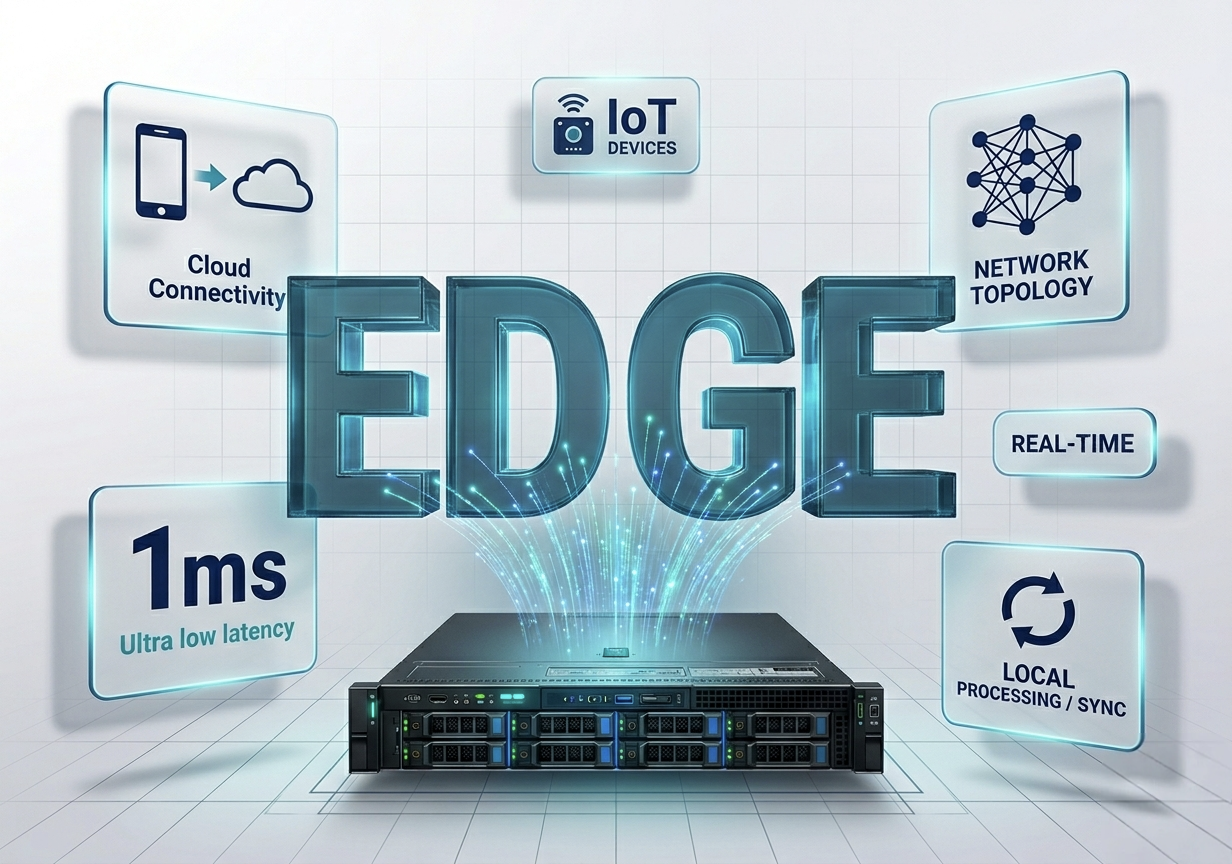
A simple guide to edge computing explaining its definition, how it works, and why it matters. Includes FAQs to help you understand how edge computing improves speed, reduces latency, and supports modern connected systems.
As technology evolves, businesses are generating and processing more data than ever before. Traditional cloud computing is powerful, but it is not always fast enough for real-time needs. This is where edge computing comes in. It brings data processing closer to where the data is generated, improving speed, efficiency, and responsiveness. In this guide, you'll understand what edge computing is, how it works, and why it is becoming essential for modern digital systems.
1. What Is Edge Computing?
Today's digital world runs faster than ever. Businesses, governments, consumers, and devices expect information at their fingertips, processing to happen in real-time (or faster), and everything to be connected. Together, these demands have contributed to the growth of edge computing.
Edge computing refers to anything that doesn't take place in a traditional data center or the cloud. Instead of sending every piece of information, request, or instruction out to a centralized server farm, edge computing completes work at the edge of a network. Put another way, edge computing involves local processing that happens on-device or nearby on local computers.
Edge computing devices or servers can be thought of as mini data centers that run the same kinds of applications as larger cloud providers. It's common for industries to use a hybrid of edge computing and cloud computing to power their modern applications.
2. How Does Edge Computing Work?
To learn more about how edge computing works, consider the example of an industrial factory floor with hundreds of networked sensors. Traditionally, all the sensor data would be sent to the cloud for processing. That can take precious milliseconds or seconds and impact the efficiency or safety of the system.
With edge computing, many of those data transactions can be processed directly on-premise or at an edge server closer to the factory. In many cases, only actionable insights or summaries are sent to the cloud.
Edge devices can crunch analytics, identify abnormalities, or automatically trigger other devices to perform an action without consulting a cloud server. Everything happens instantaneously on the device (or nearby) instead of being routed out and back.
3. Why Does Edge Computing Matter?
Simply put, edge computing matters because we have too much data. The internet of things (IoT) has produced millions of sensors, cameras, smart devices, and more. Industries like healthcare, manufacturing, transportation, and retail are deploying these devices at unprecedented rates.
If every device sent all that information to the cloud for processing, it would take too long. Instead, we need computing and processing power everywhere. Edge computing moves the compute power closer to where data is being generated.
Benefits of edge computing include lower latency, improved responsiveness, reliability, and savings on bandwidth. Critical applications like self-driving cars, remote surgery, or monitoring industrial equipment require near-instantaneous response times. Edge computing can facilitate this by distributing computing power closer to where it's needed.
4. What Are Some Examples of Edge Computing?
Many industries and smart devices use edge computing solutions. Doctors and nurses can wear IoT devices that monitor their vitals. If a patient's heart rate suddenly drops, medical staff can be automatically notified on their phones or computers.
Industrial factories have also been early adopters of edge computing. By analyzing data from sensors placed on machinery, factories can identify when equipment is likely to fail. They can dispatch maintenance before the problem worsens and prevent production delays.
Self-driving cars need to process enormous amounts of information from multiple sensors to drive safely. Instead of routing all that data through the cloud, edge computing can happen directly in the car.
Smart cities use edge computing to process traffic cam footage, sensor data from buildings, and more to keep cities running smoothly. Retail stores use edge technology to deliver personalized offers to customers' smartphones as they walk by shelves stocked with tagged items. Smart refrigerators, door locks, security systems, lightbulbs, and voice assistants leverage edge computing technology in our homes.
5. Benefits of Edge Computing
There are several benefits of edge computing:
Improved Speed: Devices with edge computing technology can operate without constantly checking in with the cloud. There's no need to route everything out and back. Instructions can be sent directly to other edge devices without consulting a central server.
Improved Efficiency: Not every piece of data needs to be stored in the cloud. Instead of uploading terabytes of data to a central server, only send important information back to the cloud. Store temporary or time-sensitive data on local edge devices.
Improved Reliability: If the cloud goes down, edge devices can continue to operate as normal. Companies can operate with less downtime by processing critical information on local devices.
Improved Security: Sensitive data doesn't have to leave your building. The less information you transmit across the internet, the less risk there is of a security breach. Companies can apply robust security measures to sensitive data on edge devices.
6. What Are the Challenges of Edge Computing?
As with any technology, there are challenges with edge computing. For one, managing countless edge devices can be complicated. From software updates to hardware failures and security breaches, anything can go wrong with having more devices on the network. Secondly, industries will need to standardize how edge computing works with the cloud and existing IT environments. Data formats will need to be compatible, and communication methods must be unified.
Cost is always a consideration when deploying new technology. Will your organization see enough of a return on investment? Will your network need upgrades? These are important questions to ask before implementing an edge computing plan.
7. Edge vs. Cloud Computing & The Future
Remember that edge computing does not replace cloud computing. There's still a need for traditional server farms and cloud providers. Instead, edge computing refers to anything that happens outside the cloud. Typically, those computations happen on-device or locally on computers near the data source. Public, private, and hybrid cloud models all integrate edge computing technology today.
We expect edge computing to continue growing in the coming years. 5G will unlock more powerful edge computing capabilities. We'll see ultra-low latency applications, faster mobile network experiences, and new technologies enabled by AR/VR and self-driving vehicles.
Artificial intelligence and machine learning technologies are also being built directly into edge devices. Software agents will not just gather data and ship it back to the cloud. They'll be able to process that data and act on it independently. Manufacturing, healthcare, energy companies, transportation, and smart cities are just a few examples of industries that will be transformed by edge computing.
Conclusion
Edge computing is an extension of cloud computing that happens on-device or close to the data source. It's been a boon for many industries that need low-latency and real-time processing. Although there are plenty of challenges when managing countless edge devices, organizations are seeing the benefits of edge computing today.
Edge computing brings improved speed, efficiency, reliability, and security compared to traditional cloud solutions. As technology continues to improve, edge computing will become more powerful and enable new use cases we haven't even thought of yet. Edge computing is the future of how we process information. From IoT sensors to smartphones and self-driving cars, edge computing will continue expanding in the years ahead.