
Green Hydrogen: The Clean Energy Revolution Nobody Is Talking About
Imagine a fuel that burns cleanly, leaving only water behind. Imagine a fuel that lasts indefinitely that never goes bad. Now imagine fuel that could help eliminate emissions from some of the hardest-to-abate sources of...
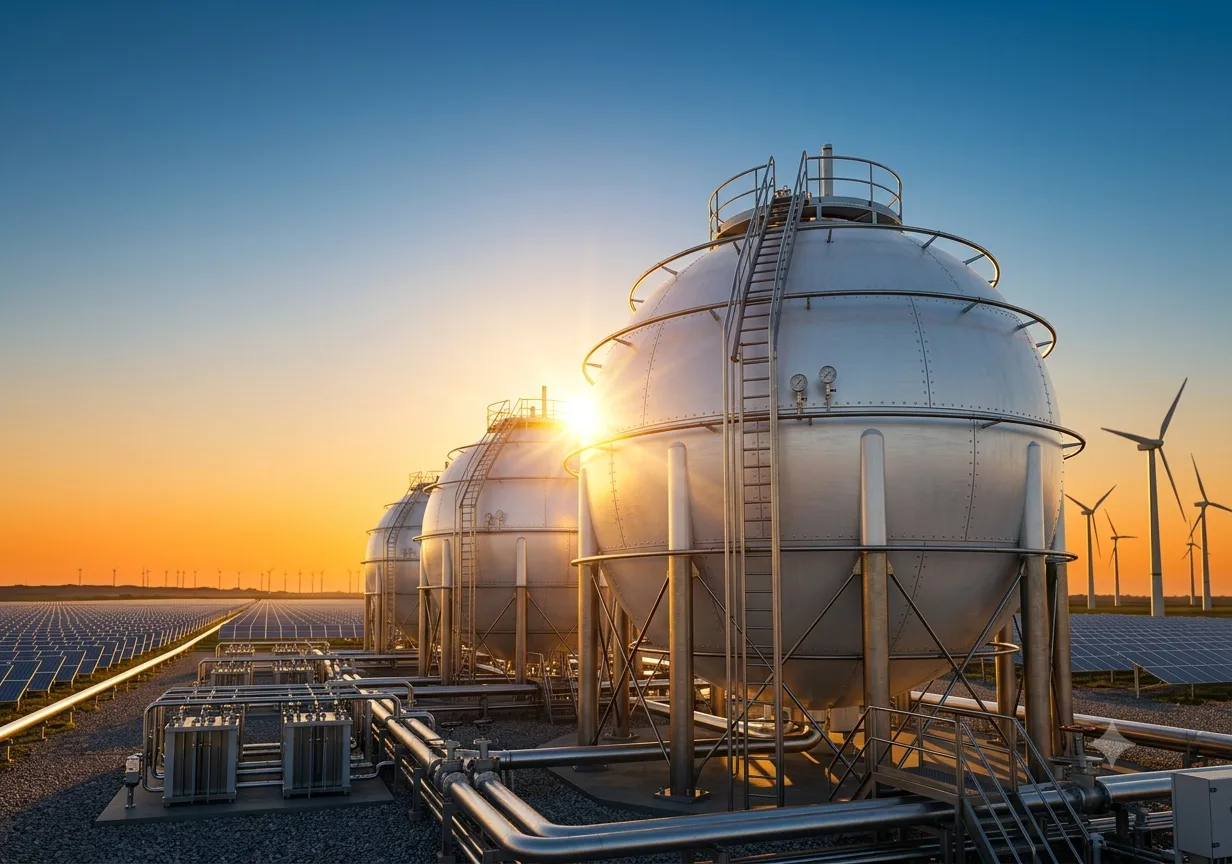
Imagine a fuel that burns cleanly, leaving only water behind. Imagine a fuel that lasts indefinitely that never goes bad. Now imagine fuel that could help eliminate emissions from some of the hardest-to-abate sources of greenhouse gases. Sound too good to be true?
Welcome to green hydrogen, the overlooked clean energy story of the decade. While headlines have been dominated by photovoltaic panels and electric vehicles, behind the scenes a green hydrogen revolution has been brewing. Clean energy investment broke records in 2020, climate ambitions are reaching new heights, and investors are pouring billions of dollars into green hydrogen. Long overlooked in energy transition conversations, hydrogen has taken center stage in the coming trillion-dollar clean energy industry. Billions more have been pledged for projects spanning every continent. However, outside of clean energy circles, awareness of hydrogen is low. If you haven’t heard much about hydrogen either, you’re not alone. Here’s what you need to know.
What Is Green Hydrogen and How Does It Work?
Before we get into the economics and industry perspective of green hydrogen, let’s start with why green hydrogen is pretty cool from a scientific standpoint. Hydrogen, composed of only one proton and one electron, packs almost three times as much energy per pound as gasoline. However, you can’t simply go out and collect it. Hydrogen needs to be separated from other molecules that it’s attached to; the most prevalent sources of hydrogen are water (H2O) and methane (CH4). As part of their terminology around hydrogen production methods, energy industry participants have assigned colors to different production sources.
Understanding this coloring framework is helpful to understand how ‘green’ hydrogen stands out from traditional production. By far the most common hydrogen produced today is gray hydrogen. Gray hydrogen is produced by combining natural gas with steam to produce hydrogen and… you guessed it, lots of CO2. Green hydrogen is hydrogen that is produced solely by electrolysis. Electrolysis is the splitting of water (H2O) into its parts; hydrogen and oxygen. The key is where the energy comes from to power the electrolysis process. If the electricity comes from renewable sources (wind turbine, solar panels, hydroelectric dam), then there are zero carbon emissions associated with the production of the hydrogen. Plus, when you burn green hydrogen (either in a fuel cell to create electricity or simply burn it), the only byproduct is water. Green hydrogen is the only fuel that you can produce and use that doesn’t create carbon emissions.
Why Green Hydrogen Is Important for Decarbonization
Green hydrogen is unique among clean energy technologies in that there are unique uses cases for hydrogen that make it compelling for each application. While electrification is revolutionizing how we generate electricity and power light-duty vehicles, it has limits upscaling to extremely high temperature industrial processes, long-distance heavy freight transport, intercontinental flight and transoceanic shipping. All of these sectors together represent a large chunk of global emissions, and arguably the most difficult segments to decarbonize worldwide.
Green Hydrogen Applications in Industry, Transport, and Shipping
Green hydrogen has clear and compelling use cases within each of these sectors. First, in the cement and chemical sectors where processes operate at extremely high temperatures, green hydrogen can act as both a fuel source to burn and a feedstock for chemical reactions, displacing the need for coal and natural gas to burn these industrial kilns.
Additionally, the fertilizer sector is one of the largest sources of emissions within agriculture.
Today, most fertilizer producers create ammonia using hydrogen extracted from natural gas as a key input. Transitioning these producers to use green hydrogen would greatly reduce agriculture’s emissions footprint. Hydrogen fuel cell trucks can also refuel quickly while offering longer ranges than all-electric trucks, giving fleet operators who can’t have trucks sitting idle at charging stations a cheaper alternative. Finally, many major shipping companies like Maersk are investing in ammonia (a hydrogen-derived fuel) as the most likely solution to decarbonize international shipping. Hydrogen can be converted into other useful products like ammonia, methanol, synthetic jet fuel, and many others which increases its utility far beyond its direct usage metrics would indicate.
Green Hydrogen Investment Trends and Market Growth
Investment momentum into green hydrogen begins with the investment boom in renewables over the last decade. Solar PV module prices have dropped by over 90% since 2010. Wind prices have declined by more than 70% over the same time. As green hydrogen is produced by electrolysis powered by renewable electricity, cheap power from renewables is key to unlocking green hydrogen's cost competitiveness. As renewable energy becomes cheaper, green hydrogen is getting closer to price parity with grey and blue hydrogen. Every major asset manager is sounding the alarm on the climate crisis. BlackRock has identified hydrogen as a central element of its clean energy strategy. Climate investment firm Breakthrough Energy Ventures, founded by Bill Gates and other technology billionaires, has made significant investments in hydrogen focused companies.
Government Support for the Hydrogen Economy
Meanwhile, sovereign nations are mobilizing trillions of dollars of public funds to incentivize green hydrogen investments. The US alone is investing over $9 billion in direct funding for clean hydrogen under the Bipartisan Infrastructure Law and the Inflation Reduction Act.
Japan, highly motivated by energy security and their heavy reliance on imported energy, plans to invest $107 billion over the next 15 years on building out a hydrogen supply chain that will support both domestic and international hydrogen trade. South Korea recently released their national roadmap for a hydrogen economy with concrete milestones for the deployment of fuel cell vehicles, hydrogen power, and production capacity. Investors and governments around the world are getting ready for green hydrogen.
Major Green Hydrogen Projects Around the World
By far the best proof that green hydrogen has already moved from demonstration projects to industrial scale deployments is the number, size, and global distribution of major projects currently under development or already under construction worldwide. These projects are measured in billions of dollars, not millions. Their output capacity is designed to meaningfully impact domestic economies at the national level, let alone the regional and global level.
Australia, Saudi Arabia, Europe, and Morocco Lead Green Hydrogen Development
Western Green Energy Hub in Australia will eventually be one of the largest renewable energy projects ever built, featuring 50 gigawatts (GW) of combined wind and solar capacity to fuel its green hydrogen and ammonia export facility to energy-intensive consumers throughout Asia. NEOM's green hydrogen facility in Saudi Arabia which is partnered between Air Products, ACWA Power, and NEOM plans to export 600 tonnes of green ammonia per day powered by 4 GW of dedicated wind and solar capacity starting in 2026. In Europe, large-scale plans are being laid to reposition the North Sea as a hub for offshore wind and as the backbone of a European-wide green hydrogen economy, complete with dedicated hydrogen pipelines to transport North Sea-produced hydrogen to heavy industry throughout Germany, Netherlands, and Belgium. Morocco is looking to capitalize on its prime location between Europe's demand for clean energy and Africa's abundant renewable energy resources by building out major green hydrogen production facilities with pipeline
capacity to export directly to Europe on the Iberian Peninsula. Taken together, all of these
projects and the ones like them coming online around the world represent the foundational building blocks of a future global green hydrogen trade network that will rival the infrastructure built around liquefied natural gas (LNG) trade throughout the second half of the 20th century in reverse.
Challenges Facing the Green Hydrogen Industry
There are of course major challenges to realizing a green hydrogen economy as well. It’s only fair that they get some airtime too.
Green Hydrogen Costs and Water Usage Challenges
Cost. The biggest challenge facing green hydrogen is that it hasn’t reached cost parity with gray hydrogen in most parts of the world. Right now the biggest drivers of the price of green hydrogen are the capital cost of the electrolyzer and the price of renewable electricity used to power it. Both of these ‘cost curves’ have shown steep declines year over year, and are expected to continue improve as engineers and manufacturing scale up operations. Costs for green hydrogen production are expected by the analyst’s at the Hydrogen Council to reach $1 to $2 / kg in the most advantaged geographies by 2030 and that will be enough for it to be cost competitive with gray hydrogen and require no policy support.
Water Usage. Another challenge that gets raised frequently is water usage. Hydrogen production through electrolysis requires about 9 liters of purified water per kilogram of hydrogen produced. In water-stressed regions with plenty of sun (hello Australia!), questions about water availability for industrial scale hydrogen production are certainly valid. Solutions like desalination paired with abundant renewable energy already onsite is one potential solution, albeit one that increases system complexity and cost.
Opportunities and Innovation in Green Hydrogen Technology
Industrial Opportunity. Speaking of electrolyzers, one of the hottest opportunities for tech innovation right now has to be in electrolyzer manufacturing. Just about every electrolyzer manufacturer in the world Nel Hydrogen, ITM Power, Plug Power, Thyssenkrupp Nucera is rapidly increasing manufacturing capacity, helping to drive down unit costs as economies of scale kick in and the engineering is iterated on. Improvements to membrane materials, catalyst formulations, stack designs, and more will lead to another step-function improvement in electrolyzer tech over the next decade. It’s also worth noting that the intersection of green hydrogen with carbon capture tech, digital optimization, and advanced materials science will be a particularly fertile ground for innovation.
Why Green Hydrogen Receives So Little Public Attention
Green hydrogen has become something of a Schrodinger’s cat in the public mind. To those in the know energy ministers and their teams, corporate boardrooms, climate wonks it’s the topic on everyone’s lips; the missing puzzle piece of net-zero by 2050. Tell that to the man in the street, however, and you’re likely to receive a quizzical look.
The Future of the Global Green Hydrogen Economy
Public awareness of energy tech matters. Consumers adopt new technologies. Voters get won over. Writers pen columns. Public sentiment can’t build transmission networks, but it can catalyse political will and create a sense of urgency. That’s part of why decarbonising our energy systems has taken so long. It’s why we’ve got renewables but not enough renewables. Build back better means telling better stories about what we build.
The Green Hydrogen Revolution Is Already Here
Right now, the story of green hydrogen is lacking. Sure, part of that is because hydrogen doesn’t have quite the dramatic flair of its better-known cousins. News footage of solar panels and wind turbines tends to look more exciting than tubes of pressurised gas and piles of metal in sterile rooms. There’s also a storytelling failure when it comes to hydrogen. As with any major technological shift, the build-out of green hydrogen infrastructure represents years if not decades of activity, stories, and vested interests coming to a head. Suddenly, almost overnight, countries with access to cheap renewable energy and plentiful land (Australia, Chile, Namibia, Morocco, Saudi Arabia) find themselves with the potential to become the OPECs of the twenty-first century. Companies that get ahead of the curve on hydrogen production/storage/use technologies find themselves with a significant leg-up over their less foresightful competitors. The green hydrogen revolution isn’t something that’s coming. It’s happening. It’s already here. We just haven’t noticed yet.
Why Green Hydrogen Matters for the Future of Clean Energy
If there is one thing that defines the green hydrogen narrative, it is one of potential. The potential to electrify human society without destroying our climate. To build entire new sectors and economies where once there was only energy poverty. To overcome the toughest obstacles remaining in our global shift away from fossil fuels. The pieces are falling into place. Scientists and engineers have assured us of the former. Investors, financial institutions, and governments are proving the latter. Projects are popping up all over the world at a rate we haven’t seen since the early days of renewables. Costs are falling as technologies continue to rapidly improve, often beyond our wildest expectations. All that’s been lacking has been widespread public understanding of what’s going on behind closed doors. We’re here to change that. To provide a straightforward look at hydrogen in all its forms what it is, why it’s important, and why we need it to win the race against climate change. It won’t be long before green hydrogen is on everyone’s lips. Projects will be too big to hide, costs will continue to drop as they become mainstream, and climate change will demand solutions in every sector of the economy. For those who care about building a better future, there is no time like the present to learn about the green hydrogen revolution.