
A Train Crash in Indonesia Just Killed 16 Women. Now the Country Is Demanding Answers.
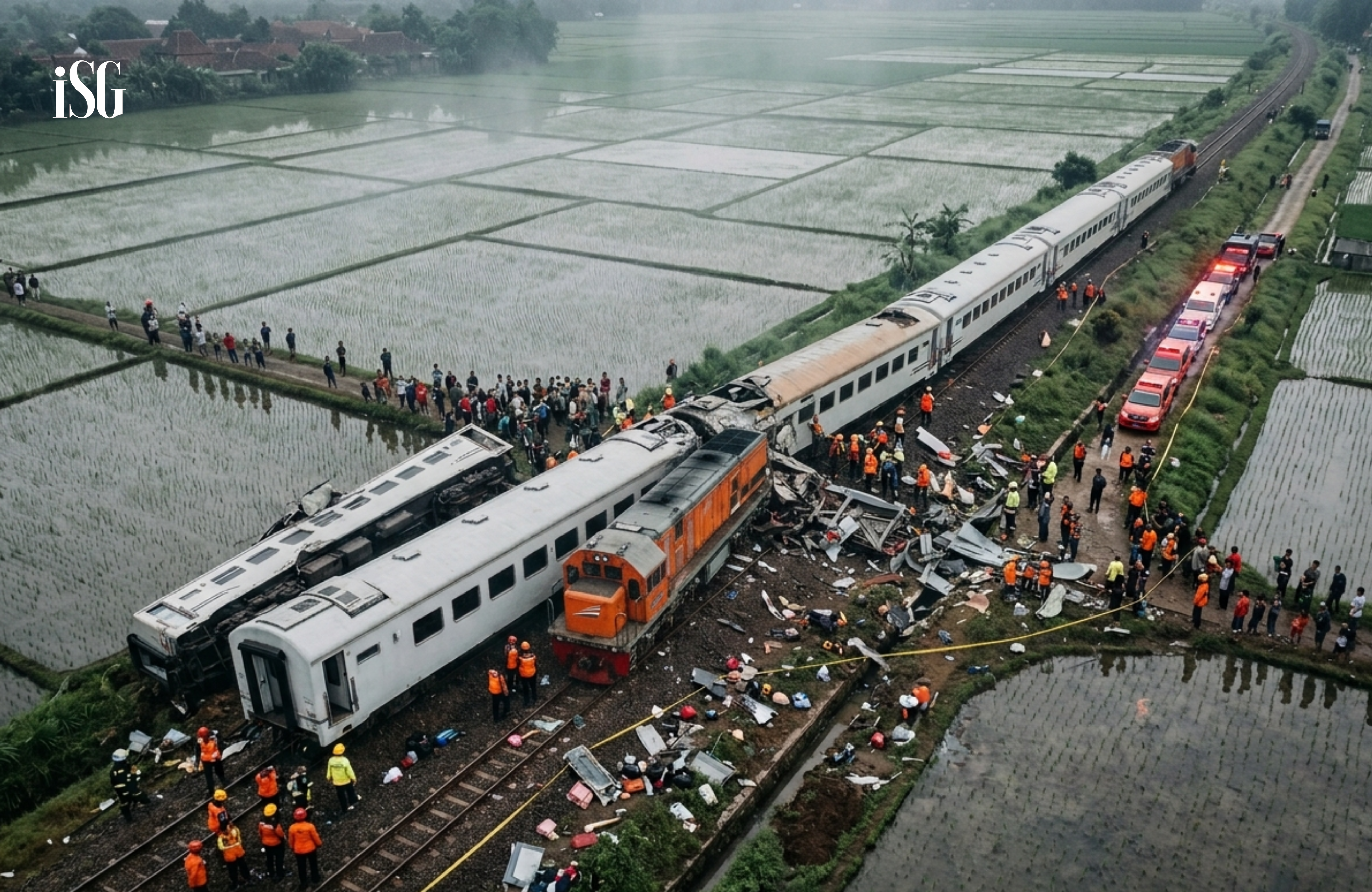
On the evening of April 27th, a high-speed express train slammed into the back of a stationary commuter train at a station on the outskirts of Jakarta. The rear carriage - designated exclusively for women - absorbed the full force of the impact.
All 16 people killed were women. More than 90 others were injured. Two deadly accidents in less than a week have turned Indonesia's chronic railway safety problem into a national crisis.
What Happened
On the evening of April 27th, a high-speed express train slammed into the back of a stationary commuter train at a station on the outskirts of Jakarta. The rear carriage - designated exclusively for women - absorbed the full force of the impact. All 16 people killed were women. More than 90 others were injured.
The chain of events began at an unguarded level crossing, where an online taxi got stuck on the tracks. A commuter train struck the vehicle, forcing it to stop at the station ahead. Moments later, the Argo Bromo Anggrek express - traveling at around 110 kilometers per hour after receiving a proceed signal - had no time to stop.
A Second Accident Days Later
Just days later, a second train accident in Central Java killed four people including two young children, when thick fog prevented a car driver from seeing an oncoming train at another level crossing.
The Political Fallout
Two deadly accidents in less than a week have turned Indonesia's chronic railway safety problem into a national crisis. The president has pledged $230 million to overhaul dangerous level crossings across Java and ordered an investigation into the first crash. Police have now questioned 31 witnesses including the taxi driver, crossing guard, and railway officers.
Lawmakers are demanding the resignation of the national rail company's chief executive, calling the crash a result of gross negligence under his leadership.
A System Long Under Strain
Indonesia's rail network carries millions of passengers daily. Critics say years of underinvestment, fragmented safety responsibility, and thousands of unguarded crossings have made this kind of tragedy not a question of if, but when.