Visionary Leaders Transforming Human Resources & Workplace Culture 2026
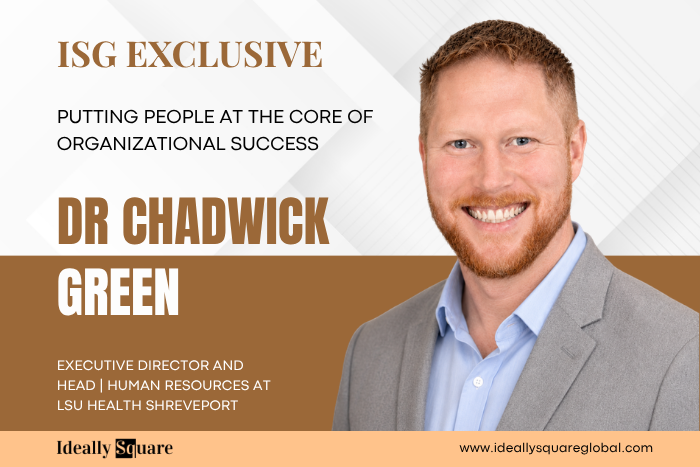
Chadwick Green, Executive Director and Head of Human Resources at LSU Health Shreveport, believes people are at the center of every successful organization. With more than 17 years of experience across healthcare, government, education, manufacturing, startups, and large-scale operations, he brings a people-centered approach to leadership, culture, trust, psychological safety, accountability, and organizational transformation. His experience in industrial and organizational psychology, combined with military service and strategic HR leadership, has shaped a philosophy focused on creating workplaces where people and performance can thrive together.
Chadwick Green: Putting People at the Core of Organizational Success
Some of the most important moments in an organization never reach the boardroom. They happen when an employee decides whether it is safe to raise a concern, when a manager chooses how to respond to a mistake, or when a difficult decision must be delivered without losing sight of the person receiving it. These moments may appear small, but repeated over time, they become culture. They shape trust, influence performance, and determine whether people feel they are simply working for an organization or genuinely contributing to its purpose.
Chadwick Green has spent more than 17 years paying attention to these moments and the larger systems behind them. As Executive Director and Head of Human Resources at LSU Health Shreveport, he brings experience across healthcare, government, education, manufacturing, startups, and large-scale operations.
A Career Built Around People
Chadwick Green’s career has been guided by one belief: people are at the center of every successful organization. He entered HR not simply to manage processes, but because he recognized how leadership, culture, communication, accountability, and trust can either elevate or weaken an organization.
His experience spans healthcare, government, education, manufacturing, startups, and large-scale operations. Each environment offered distinct lessons. Healthcare emphasized urgency, compassion, and mission, while government and education highlighted structure, policy, and public trust. Manufacturing and operations reinforced speed, accountability, and the impact leadership decisions have on frontline employees.
These experiences prepared Chadwick to serve as Executive Director and Head of Human Resources at LSU Health Shreveport. Here, he views HR not merely as an administrative function, but as a strategic partner supporting mission, culture, leadership, and sustainable systems. His journey has focused on aligning the human and operational sides of organizations to create meaningful impact.
His background in industrial and organizational psychology further shapes this perspective, encouraging him to examine not only individual performance but also the organizational systems, leadership behaviors, and workplace dynamics that influence long-term success.
Military service also influenced Chadwick's leadership philosophy. It reinforced the importance of discipline, servant leadership, accountability, and mission focus, principles that continue to shape how he approaches organizational leadership and develops high-performing teams.
HR Beyond Its Traditional Boundaries
Over more than 17 years, Chadwick’s understanding of HR has evolved significantly. Early in his career, he viewed it primarily through compliance, hiring, benefits, and policy. While these responsibilities remain essential, he believes modern HR carries a much broader mandate.
Today, HR leadership encompasses strategy, culture, risk management, workforce planning, and organizational transformation. HR leaders must understand people while also developing knowledge of operations, finance, governance, and external forces.
For Chadwick, effective HR leadership also requires courage. At times, HR must question whether decisions are fair and aligned with organizational values. At others, it must remove barriers and help leaders act decisively.
The strongest HR leaders work alongside executive leadership to shape the organization’s future. HR should protect people while also driving performance.
The Everyday Architecture of Trust
Chadwick believes a strong workplace culture is intentional. It is built through trust, consistency, communication, accountability, emotional intelligence, and psychological safety.
Trust is its foundation. Employees must believe their leaders are honest and consistent. However, trust is developed through everyday actions, including how leaders communicate, manage conflict, and respond to concerns.
Emotional intelligence is equally important. Technical expertise may help individuals earn leadership roles, but emotional intelligence often determines how effectively they lead.
Psychological safety enables employees to speak openly, contribute ideas, and acknowledge mistakes without fear. It does not remove accountability but allows respect and responsibility to coexist.
Ultimately, policies alone cannot create culture. Leaders define it through the behaviors they model, reward, and tolerate.
Where Well-Being Strengthens Performance
Chadwick does not consider organizational performance and employee well-being competing priorities. Instead, he believes they reinforce one another. Employees who feel valued and connected to a meaningful purpose are more likely to remain engaged and perform effectively.
Human-centered leadership requires discipline. It involves setting clear expectations, communicating openly, providing feedback, and connecting employees to organizational purpose.
Leaders must balance clarity with empathy. Employees value transparency, fairness, and an understanding of the decisions that affect them.
A people-first approach does not mean avoiding difficult decisions. It means making them with dignity and respect while recognizing employees as individuals with lives, aspirations, and potential beyond their professional roles.
The Emotional Compass of Leadership
In today’s complex workplace, Chadwick considers emotional intelligence an essential leadership capability. Leaders manage more than tasks; they also guide people through change, conflict, uncertainty, and evolving expectations.
Emotionally intelligent leaders are self-aware, thoughtful, and measured. They communicate difficult messages effectively and hold others accountable while maintaining respect.
Within HR, emotional intelligence is particularly important during sensitive conversations and challenging situations. Chadwick believes that how a message is communicated can be just as important as the message itself.
Emotional intelligence also strengthens credibility. Leaders who balance strategic thinking with empathy are better positioned to build trust and create sustainable progress.
Where Every Voice Feels Safe
Psychological safety begins with leadership behavior. Employees observe how leaders respond to questions, concerns, feedback, and mistakes. These responses determine whether people continue to speak openly or choose to remain silent.
Chadwick believes organizations can strengthen psychological safety by encouraging dialogue, listening without defensiveness, and valuing feedback even when it is uncomfortable.
Training in communication, conflict resolution, and employee engagement can support this effort, but culture is ultimately shaped through daily interactions.
Closing the feedback loop is equally important. When employees see that their input leads to visible action or receives a transparent response, trust grows.
One experience that reinforced this philosophy involved an employee who initially believed their concerns would never be heard. Through transparent communication, careful listening, and a fair process, the immediate issue was resolved while also improving the underlying system. For Chadwick, the experience affirmed that trust is rarely built through one major initiative, it is built one respectful conversation at a time.
For Chadwick, psychological safety is not the absence of expectations or standards. It is the presence of respect and accountability.
Difficult Conversations with Dignity
Difficult conversations are an unavoidable part of HR leadership. Chadwick approaches them with preparation, fairness, empathy, and clarity.
Preparation ensures accuracy and a complete understanding of the context and desired outcomes. Fairness builds confidence in the process, while empathy acknowledges the individual without removing accountability.
These conversations should be direct yet respectful. The objective is to preserve dignity while maintaining organizational integrity.
Rather than creating further uncertainty, difficult discussions should provide clarity, encourage resolution, and establish a constructive path forward.
Creating Careers Beyond Vacancies
Attracting and retaining talent extends beyond compensation. Today’s workforce increasingly values purpose, professional growth, flexibility, meaningful work, and strong leadership.
Organizations must communicate an authentic and compelling story about their mission, culture, and opportunities. Chadwick believes recruitment should accurately reflect the employee experience.
Retention begins with listening. Employees often leave because of leadership experiences or workplace culture rather than the organization itself. Workforce data and employee feedback can help identify concerns and guide meaningful action.
Investing in professional development, internal mobility, and recognition can strengthen retention. Employees are more likely to remain where they can envision a future.
Innovative talent strategies require organizations to reconsider outdated processes and create meaningful experiences throughout the employee journey.
Turning Inclusion into Shared Strength
Chadwick views inclusion and belonging as leadership responsibilities rather than isolated programs. Compliance provides an essential foundation, but genuine inclusion ensures employees feel respected and are able to contribute fully.
Organizations must examine the systems influencing employee experiences, including who receives access to opportunities, who advances, and where barriers may continue to exist.
Belonging develops through fair processes, inclusive leadership, open communication, and honest dialogue.
Leaders must take responsibility for continued learning and progress. Strong organizational cultures recognize different experiences and perspectives as valuable strengths.
Building the Workforce of Tomorrow
Chadwick believes HR will continue evolving toward strategy, analytics, and organizational transformation. Successful organizations will increasingly align their people strategies with broader business priorities.
Data-driven decision-making will become more important, enabling HR leaders to develop deeper insights into workforce trends, employee needs, and organizational risks.
Leadership development will also grow in importance as organizations respond to increasing complexity and change.
Employee experience will remain central, particularly as expectations around purpose, flexibility, growth, and transparency continue to evolve.
HR must also respond to artificial intelligence, automation, and changing workforce needs while ensuring people remain at the center of organizational decisions.
Technology with a Human Core
Technology is reshaping HR by improving efficiency and creating greater opportunities for strategic contribution.
Automation can reduce administrative responsibilities, allowing HR professionals to focus more on leadership support, employee engagement, and workforce planning. Data analytics can also help organizations identify emerging challenges and risks.
Artificial intelligence may enhance recruitment, onboarding, and communication, but Chadwick believes it must be used responsibly and ethically.
The challenge is preserving the human element. Efficiency cannot replace empathy, trust, meaningful communication, or ethical judgment.
When used thoughtfully, technology can strengthen HR’s strategic impact while maintaining its human focus.
The Character Behind the Title
Chadwick encourages emerging leaders to prioritize character and emotional intelligence over titles.
Leadership is not about visibility. It is reflected through clarity, trust, responsible decision-making, and the ability to develop others.
Strong leaders listen, communicate clearly, and remain open to feedback. They understand that organizational decisions have a human impact.
Accountability is equally essential. Leadership often requires difficult choices and the willingness to take ownership of their outcomes.
The most effective leaders remain teachable and committed to continuous growth, regardless of their experience or position.
Reading the System Behind the Symptoms
Chadwick’s background in industrial and organizational psychology influences how he approaches leadership and organizational effectiveness.
It encourages him to look beyond visible symptoms and examine the systems behind them. Challenges such as employee turnover or disengagement may reflect broader concerns involving leadership, communication, culture, or organizational structure.
His background also reinforces evidence-based decision-making, using data and research to guide organizational action.
Organizations are interconnected systems in which people, leadership, processes, and structures influence one another. Improving performance, therefore, requires an understanding of both human behavior and organizational design.
A Legacy of Strategic and Human Leadership
Throughout his career, Chadwick has led organizational transformation initiatives, modernized HR operations, strengthened leadership development efforts, redesigned workplace systems, and helped executive teams align people strategies with institutional priorities. While each organization has presented different challenges, his focus has remained consistent: creating sustainable systems that improve both organizational performance and the employee experience.
Of all his achievements in HR, Chadwick is especially proud of making organizations more reflective, accountable, and people-oriented.
Creating the HR functions to act as strategic partners and mentoring leaders who face difficult decisions have been especially rewarding in his career.
He is also proud of designing systems and development programs that make organizations better and help their employees.
Moreover, Chadwick is proud of making discussions on emotional intelligence and the role of leadership more than just compliance issues.
At the end of his career, Chadwick wishes to leave a legacy of strategic yet human HR that helps achieve high performance through a supportive environment.
Courage for the Next Generation
Chadwick urges potential HR leaders to be aware of the obligation that comes with the job.
HR does not consist only of policies and procedures. Human resource professionals help individuals through crucial times in their lives, and thus, the way in which they react is crucial.
He urges young leaders to be brave, fair, informed, and prepared. They have to be aware of what the organization’s goals are, as well as the implications behind it for human beings.
Empathy and accountability cannot be considered as conflicting qualities. In order to be a good HR leader, one has to be able to combine both.
In spite of technological changes and new expectations, as workplaces keep on changing, there will still be a need for continual learning. Values like integrity, dignity, fairness, and respect will always be fundamental.
Individuals may also become leaders from any position, according to Chadwick.
Looking back, Chadwick believes many of his greatest leadership lessons came not from formal training but from difficult conversations that required patience, humility, and reflection. Those moments reinforced that leadership is a continual learning process rather than a destination.
Creating Cultures Built to Endure
In the years to come, Chadwick sees the culture of workplaces as needing to be more intentional. People nowadays see the importance of organizations in showing what their core values are and not just stating them.
The HR professionals will have to deal with issues like burnout, talent shortage, shifting expectations, and declining trust through sustained organizational commitment and not just temporary fixes.
Stewardship defines Chadwick’s view of leadership. Leadership comes with influence, and influence needs to be used wisely in order to build up the organization and its people.
HR holds a chance to create a future of work that is strategic, humane, accountable, and resilient. This future is where Chadwick strives to make his impact.
Ultimately, Chadwick believes policies may shape organizations, but people determine whether they thrive. His goal has never simply been to build better HR departments; it has been to help build organizations where people can do the best work of their careers while advancing missions that matter.
Read the full issue
Open Magazine →