Brazil’s Most Influential Leadership, Corporate Wellness & People Development Leaders to Watch in 2026.
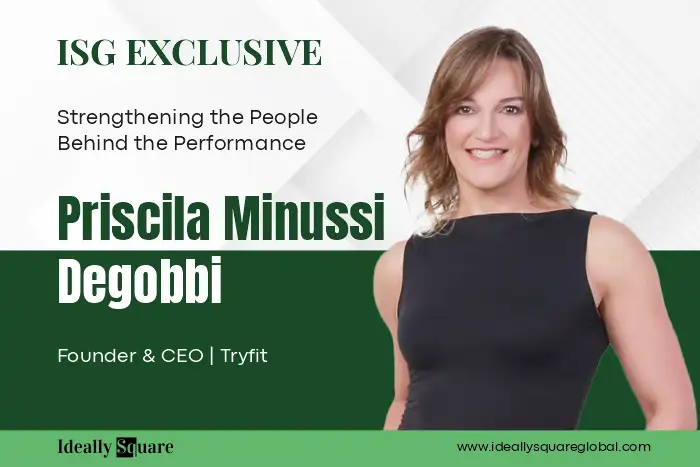
Priscila Minussi Degobbi, Founder & CEO of Tryfit, helps leaders and teams connect personal well-being with business performance. Drawing from high-performance sport, emotional intelligence, positive psychology, mindfulness, and organizational development, she focuses on strengthening people, relationships, and leadership. Her work combines wellness, continuous improvement, human-centered technology, and experiential learning to create measurable organizational change. Through Tryfit, she continues to promote leadership built on discipline, resilience, purpose, and human connection.
From Performance to People Potential
Priscila's professional journey began in the world of Physical Education and high-performance swimming, where she developed a deep appreciation for discipline, consistency, and the connection between physical preparation and mental strength. After years managing a health club within a multinational hospitality organization, she founded Tryfit with a focus on health club management and consulting.
Over time, Priscila recognized that her expertise in leadership and people management could create impact far beyond the fitness industry. By integrating emotional intelligence, positive psychology, mindfulness, and The Energy Codes® into her work, she expanded Tryfit into a company dedicated to leadership development, people growth, and corporate wellness. Today, her mission is to help leaders and teams identify limiting beliefs, overcome fears, strengthen relationships, and improve organizational performance through a holistic approach that balances personal well-being with business success.
Where Human Development Meets Business Results
The foundation of Tryfit's methodology emerged from a deeply personal experience. During a particularly challenging period in her career, Priscila experienced severe anxiety and symptoms that brought her close to developing panic disorder. This experience prompted her to explore meditation and complementary well-being practices as part of her recovery journey. These experiences revealed the powerful connection between emotional health and professional performance. Her work evolved further through The Energy Codes®, developed by Dr. Sue Morter, which explores the relationship between conscious intentions and subconscious patterns. As a Certified Facilitator of The Energy Codes® through the Morter Institute, Priscila incorporates selected practices into experiential learning environments while maintaining a clear distinction from medical or psychological treatment.
Combined with lessons learned from high-performance sport, this perspective shaped a methodology that addresses not only processes and strategies but also the human factors that influence outcomes. Through leadership tools, assessments, wellness practices, and operational strategies, Tryfit helps organizations create meaningful and measurable change.
The Hidden Barriers to Team Performance
Throughout her work with organizations across multiple industries, Priscila has observed two recurring leadership challenges.
The first is the inability of leaders to recognize that individuals process information, communicate, and make decisions differently. When leaders rely solely on their own communication preferences, misunderstandings increase, instructions become unclear, and unnecessary rework follows. These issues are often mistaken for poor performance when the true challenge lies in communication gaps and insufficient trust.
To address this, Priscila leverages tools such as DISC assessments, communication-style mapping, active listening practices, two-way feedback, and feedforward techniques to help teams develop a common language and stronger understanding.
The second challenge is the lack of consistent relationship-building after recruitment. While organizations invest heavily in hiring and onboarding, they often neglect the ongoing efforts required to foster trust, recognition, development, and belonging. Priscila refers to this approach as ‘post-hiring care’—a commitment to continuous communication, feedback, recognition, and clear expectations, recognition, and clear expectations that strengthens engagement and long-term performance.
Wellness as a Business Strategy
Priscila views employee well-being as inseparable from organizational performance. She believes emotional health, leadership effectiveness, and business outcomes are deeply interconnected.
Workplace stress, anxiety, and psychosocial risks often create a chain reaction within organizations. When leaders become overwhelmed, communication suffers, tensions escalate, and small issues grow into larger organizational challenges. Absenteeism, turnover, recruitment costs, reduced productivity, and delayed performance frequently follow.
Rather than treating wellness as an occasional employee benefit, Priscila advocates for a proactive and continuous approach that is embedded within leadership practices. By helping leaders communicate effectively, identify psychosocial risks, and support emotional well-being, organizations create healthier teams, stronger engagement, and more sustainable business performance.
The Future Belongs to Human-Centered Technology
As technology, artificial intelligence, and digital transformation continue to reshape the workplace, Priscila believes organizations are entering a new era where technological capability and human capability must evolve together. While digital tools are creating unprecedented opportunities to personalize learning, identify skill gaps, monitor engagement, assess organizational risks, and support more informed decision-making, she emphasizes that technology should serve people rather than replace the human elements that drive sustainable performance.
Priscila sees significant value in artificial intelligence, digital assessments, and data-driven platforms that can help organizations better understand factors such as employee wellbeing, workload, absenteeism, communication patterns, and development needs. These technologies can accelerate learning, improve efficiency, and provide leaders with insights that were previously difficult to obtain. However, she stresses that their implementation must remain ethical, transparent, and respectful of privacy, ensuring that individuals are not reduced to data points or performance metrics.
At the same time, she believes that the rise of artificial intelligence is increasing the importance of distinctly human capabilities. Skills such as emotional intelligence, self-awareness, empathy, emotional regulation, trust-building, psychological safety, ethical judgment, and meaningful communication are becoming critical differentiators in leadership. While technology can organize information and enhance decision-making, it cannot replace the relationships, trust, and human connection that enable people and teams to thrive.
Looking ahead, Priscila anticipates continued growth in hybrid learning environments, immersive workshops, wellness-focused retreats, and personalized development experiences that blend digital accessibility with meaningful human interaction. In her view, the most successful organizations will be those that embrace innovation while preserving the qualities that make leadership fundamentally human.
For Priscila, the future does not belong to technology alone. It belongs to organizations that can balance technological efficiency with authentic human connection, creating environments where both people and performance can flourish.
Aligning Continuous Improvement with Human Growth
Priscila believes operational excellence and people-centered leadership should never be viewed as competing priorities. While every organization must focus on performance and results, sustainable improvement depends on the willingness of people to embrace and support change.
Drawing on frameworks such as the Kübler-Ross Change Curve, she highlights the emotional journey individuals often experience during periods of transformation. Resistance, uncertainty, exploration, learning, and commitment are natural stages of change, and effective leaders must guide people through each phase with empathy and clarity.
To support this process, Priscila combines continuous improvement methodologies such as Kaizen with practical tools including Kanban systems, prioritization exercises, role clarification, and experiential learning activities. These approaches help teams see change not as a threat but as an opportunity for growth.
For Priscila, the most successful organizations understand that processes provide direction, but people create progress. When operational excellence and human development work together, companies reduce resistance, strengthen collaboration, accelerate learning, and achieve lasting results.
Culture Is Built in the Everyday Moments
Priscila believes that resilient, engaged, and high-performing teams are not created through occasional initiatives but through consistent daily actions. While emotional intelligence and people-management practices provide the foundation, leaders play a critical role in reinforcing culture and reconnecting individuals with a shared sense of purpose.
In her view, motivation alone is unreliable because it naturally fluctuates. Sustainable performance emerges when personal values align with organizational values and a common purpose. Clear expectations, psychological safety, recognition, and healthy conflict management all contribute to creating an environment where people can thrive.
Through experiential learning, Tryfit helps teams move beyond theoretical discussions. Workshops, team challenges, mindfulness activities, kick-offs, and immersive experiences allow participants to experience trust, collaboration, creativity, and leadership firsthand. Priscila has observed that when individuals temporarily step outside their formal roles, barriers often dissolve, allowing stronger relationships and authentic connections to emerge. For her, healthy organizational cultures are built when values, emotional intelligence, leadership, processes, and shared experiences work together consistently.
When Transformation Becomes Measurable
Among Priscila's proudest accomplishments are the measurable business results generated through leadership and people development. One particularly memorable achievement involved helping a client increase profitability by approximately fifty percent, not simply through operational improvements but by strengthening the capabilities of the leadership team itself.
Equally meaningful to her are the personal stories shared by participants whose professional and personal lives have been transformed through the programs she facilitates. She often refers to these moments as true turning points, experiences that create a clear distinction between life before and after meaningful development.
The effectiveness of her approach is also reflected in measurable organizational outcomes. In one company, a gamification initiative contributed to a twenty-six percent reduction in absenteeism. Repeat consulting engagements, long-term partnerships, invitations to strategic leadership discussions, international certifications, and becoming an accredited facilitator of The Energy Codes® all represent significant milestones in her journey. Yet for Priscila, the most meaningful measure of success remains the combination of human transformation and tangible business results.
Lessons from the Pool That Shaped Leadership
Priscila's experience as a high-performance swimmer continues to influence the way she approaches leadership and entrepreneurship. One of the most valuable lessons she learned is that motivation cannot be relied upon every day. Lasting success depends on discipline, consistency, and commitment to a larger purpose.
Drawing parallels between competitive sport and business, she explains that athletes often endure difficult training cycles, setbacks, and competitions that do not immediately produce victories. These moments are not failures but necessary stages in preparation for larger goals.
She applies the same philosophy to entrepreneurship. Even after successful projects, leaders must continue pursuing new opportunities while accepting rejection and uncertainty along the way. In her view, resilience comes from understanding that setbacks are often part of the preparation process rather than evidence of defeat. Each challenge, obstacle, and period of discomfort can provide valuable lessons that strengthen future performance.
The True Currency of Leadership
When advising emerging entrepreneurs, HR professionals, business leaders, and aspiring leadership coaches, Priscila begins with a simple principle: practice what you teach.
She believes credibility is built through consistency between words, actions, and expectations, particularly during difficult moments. Continuous learning, curiosity, and openness to innovation are equally important for those seeking to create meaningful impact.
Beyond professional growth, she encourages leaders to focus on the long-term influence they have on people's lives. In her view, success should not be measured solely by financial performance or employee retention. The true measure of leadership is found in the confidence, skills, values, and positive influence that people carry forward throughout their careers.
Priscila believes that leaders leave their greatest legacy not through titles or achievements but through the environments they create and the people they help develop.
The Leadership Imperative for the Next Decade
Looking ahead, Priscila envisions a future where leadership, well-being, and organizational performance become increasingly interconnected. As workplaces continue to evolve, she believes companies will no longer be able to separate business results from the physical, emotional, and mental well-being of their people. Emerging regulatory attention to psychosocial risks and employee wellness reflects a broader shift toward recognizing that sustainable performance depends on healthy, engaged, and supported teams.
In this environment, leadership will be evaluated not only by the ability to achieve results but also by the capacity to build trust, foster psychological safety, strengthen culture, and develop people. Skills such as emotional intelligence, self-awareness, empathy, emotional regulation, inclusiveness, adaptability, and effective communication will become essential leadership capabilities rather than desirable extras. Organizations, meanwhile, will move beyond isolated wellness initiatives toward integrated systems that combine assessment, prevention, development, and ongoing support for employees.
Priscila also anticipates growing demand for leadership development experiences that extend beyond traditional training environments. Through Tryfit's collaborative network of specialists, she is expanding initiatives that combine leadership development, wellness, hospitality, and purposeful travel. Hybrid learning models, immersive workshops, transformational retreats, and experiential programs will increasingly provide opportunities for deeper personal and professional growth while helping individuals reconnect with purpose, resilience, and human connection.
Technology will continue to play an important supporting role by enabling organizations to personalize learning, monitor engagement, identify risks, and better understand workforce dynamics. However, Priscila believes the most successful organizations will be those that balance technological advancement with authentic human connection.
For her, sustainable performance is not achieved by continuously demanding more from people. It emerges when organizations create environments where individuals are equipped with the clarity, trust, emotional resources, skills, and sense of purpose needed to perform at their best while continuing to grow. Ultimately, the future belongs to organizations that recognize that business success and human development are not competing priorities but complementary forces that drive lasting results.
The Conversation That Changed Everything
Of all the leadership lessons Priscila has learned in her extensive career, there is one experience has remained a powerful reminder of the impact of intentional leadership
At an early stage of her leadership journey, Priscila found herself in a leadership position before she felt fully prepared to lead. At the time, she was managing a team experiencing interpersonal tensions, particularly involving one employee who was considered difficult to work with. Faced with ongoing challenges, her immediate reaction was to remove the individual from the team altogether.
Instead of following her initial instinct, however, Priscila chose a different path. Drawing on her people-management skills, she initiated an open and honest conversation with the employee. The conversation transformed her understanding of both herself and the employee.
Over time, the professional dynamic changed completely. Trust was rebuilt, collaboration improved, and the relationship evolved in unexpected ways. Years later, Priscila promoted the same employee, and eventually they developed a genuine friendship. During the pandemic, that individual referred a client who generated additional business opportunities and valuable new relationships.
For Priscila, the experience remains a defining example of what purposeful leadership truly means. It reinforced her belief that leadership is not about making quick judgments or relying solely on authority. It is about listening, developing self-awareness, creating space for honest dialogue, and remaining open to possibilities that may not be immediately visible.
The lesson continues to guide her work today. She believes that developing people does not come at the expense of performance; it often becomes the catalyst for stronger results, deeper trust, and lasting organizational growth.
In the end, Priscila’s message is simple yet profound: sometimes a single conversation has the power to transform a relationship, reshape a career, and change the trajectory of an entire organization.
Quotes
"Effective leadership is not only about managing processes; it requires self-awareness, emotional regulation, communication, and the ability to positively influence people."
"Motivation fluctuates, but discipline, resilience, and purpose are what sustain performance over time."
"The greatest leadership challenge is often not a lack of talent, but a failure to recognize that people think, communicate, and learn differently."
Read the full issue
Open Magazine →