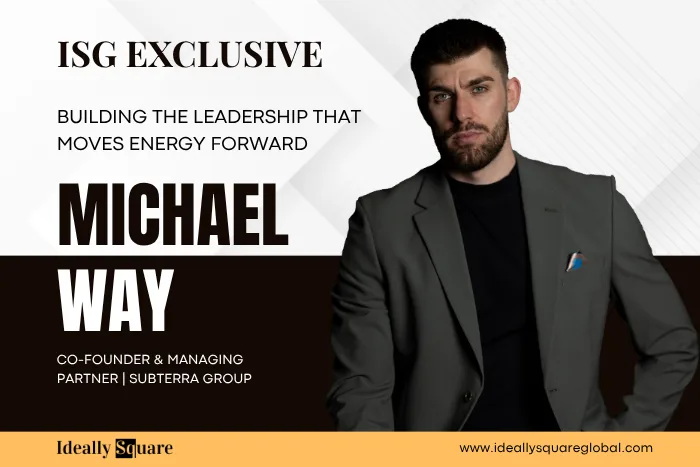
Michael Way: Building the Leadership That Moves Energy Forward
An energy company may possess the right assets, strong financial backing, promising acreage, and ambitious growth plans, yet still struggle to move forward. Often, the missing piece is not found within a reservoir report, a capital program, or a technical study. It sits around a leadership table. One appointment can alter the direction of a business. One commercial leader can open a market. One specialist can unlock years of uncertainty. Entire strategies frequently depend upon finding people whose experience and judgement align with the ambitions of the organization.
Michael Way: Building the Leadership That Moves Energy Forward
An energy company may possess the right assets, strong financial backing, promising acreage, and ambitious growth plans, yet still struggle to move forward. Often, the missing piece is not found within a reservoir report, a capital program, or a technical study. It sits around a leadership table. One appointment can alter the direction of a business. One commercial leader can open a market. One specialist can unlock years of uncertainty. Entire strategies frequently depend upon finding people whose experience and judgement align with the ambitions of the organization.
Michael Way and Subterra Group operate precisely where those decisions are made. As Co-Founder and Managing Partner, Michael has helped build a specialist search and talent advisory firm dedicated to the upstream energy industry.
The Making of a Relationship Builder
For Michael, business development has always been the defining thread throughout his professional journey. His career has been built on creating relationships, identifying opportunities, and understanding how value is generated within specialist global markets.
His early experience was shaped by commercial and client-facing roles, where success depended upon understanding people, building trust, and recognizing where genuine business value could be created. Over the years, he has led multidisciplinary teams across technology, finance, tax, and energy, initially within large corporate environments and later within specialist global organizations.
After more than a decade of building commercial functions and leading business development across specialist global organisations, Michael reached a pivotal point in his career. Rather than continue following established paths, he chose to build something of his own.
In 2025, alongside Chris Morrison, he co-founded Subterra Group with a clear ambition; to create a specialist executive search and talent advisory firm dedicated exclusively to the upstream energy industry. It was a calculated leap, driven by conviction rather than certainty, and built on the belief that deep sector knowledge, long-term relationships, and specialist expertise could deliver far greater value than a broad recruitment model.
Starting from the ground up, the founders committed fully to building a business that reflected their own philosophy of quality over volume and partnership over transactions.
A Shared Vision for Specialist Search
Subterra was never intended to be a conventional recruitment business. From the outset, Michael and Chris Morrison wanted to build a specialist firm where every search was informed by genuine industry understanding rather than transactional hiring.
Their partnership works because their strengths naturally complement one another. Chris brings extensive technical recruitment expertise and a deep understanding of the upstream talent market, while Michael focuses on commercial strategy, business development, client relationships, and long-term growth.
Together, they created a business that combines technical depth with commercial perspective—a balance that has become one of Subterra's defining strengths.
The New Rules of Energy Leadership
Asked what defines effective leadership in today's energy industry, Michael points to three qualities above all else. "For me, it comes down to clarity, adaptability, and judgment. Leaders need to simplify complexity for their teams and be comfortable making decisions even when every variable isn't known," he says.
Modern energy leaders operate within an environment influenced by geopolitical instability, energy security concerns, fiscal pressures, regulatory demands, and capital discipline. The strongest leaders are those who successfully balance opportunity with responsibility.
According to Michael, effective leaders simplify complexity for their organizations. They provide direction without unnecessary complication, demonstrate confidence without arrogance, and make informed decisions even when every variable is not fully known.
Leadership within the energy sector increasingly requires building resilient organizations through strong talent, effective teams, and leaders who can think commercially while adapting to rapidly changing environments.
Rethinking Talent for the Future
Michael has seen a noticeable shift in the conversations taking place across the industry. "Companies are no longer just looking to fill vacancies. They're thinking much more strategically about succession, capability, and the leadership they'll need for the future," he explains.
Organizations are increasingly focusing not simply on filling positions but on identifying the leadership, technical expertise, and commercial capabilities necessary for future growth. Companies are considering succession planning, regional expansion, asset optimization, and capability development more strategically than ever before.
At the same time, the industry faces significant demographic challenges as experienced professionals approach retirement while leadership pipelines remain limited.
For Michael, talent transformation involves helping businesses identify capability gaps early, develop stronger leadership pipelines, and recognize specialist talent as a long-term strategic advantage.
Specialists Who Understand Specialists
Michael views executive search within upstream oil and gas as fundamentally different from many other industries.
The sector is highly specialized, relationship-driven, and technically complex. Senior executives are rarely active job seekers, requiring a recruitment approach built upon credibility, industry understanding, and discretion.
He believes context is critical. Beyond titles and experience, organizations must understand whether candidates possess relevant regional knowledge, asset exposure, stakeholder experience, and operational understanding.
Subterra's philosophy of "Specialists Who Choose Specialists" reflects this approach, positioning the company as a trusted advisor to specialist operators and senior industry leaders.
A More Balanced Energy Future
Looking ahead, Michael sees the future of upstream energy being shaped by a more pragmatic balance between energy security, energy transition, and commercial discipline.
Domestic energy security has become a major priority for governments and businesses alike, influencing investment strategies and resource development decisions.
While lower-carbon technologies and carbon reduction remain important, he believes oil and gas will continue to play a vital role within global energy systems. Emerging frontier regions will create new opportunities, but success will depend upon strong leadership, sound commercial decisions, and strategic growth initiatives.
He also anticipates increasing demand for business development and techno-commercial professionals who can identify opportunities and guide strategic decisions.
Leading in a Borderless Industry
Energy production has evolved into a geopolitical challenge as much as a technical one, according to Michael.
Political factors increasingly influence access to resources, regulatory environments, fiscal frameworks, supply chains, and operational security. As a result, organizations must build resilience into both their strategies and leadership teams.
Successful companies, in his view, develop leaders who understand government relationships, local stakeholders, regional dynamics, and commercial realities simultaneously.
Technical excellence remains essential, but leaders must also possess cultural awareness, risk management capabilities, and the ability to operate effectively in uncertain environments.
Building Leadership That Endures
When appointing senior executives, Michael argues that organisations should prioritise judgement, credibility, and the ability to lead through complexity.
While experience remains important, the strongest leaders combine technical expertise with commercial awareness, stakeholder management, and organizational leadership.
Country Managers require strong regional understanding and government relationship skills. Asset Leaders must balance performance, safety, people, and investment priorities. C-suite executives require strategic clarity and the ability to guide entire organizations.
Ultimately, Michael believes high-performing leadership teams are built through alignment of capability, character, and organizational direction.
The Strategic Role of Business Development
For Michael, business development represents one of the most important strategic functions within any growth-oriented organization.
Within the E&P sector, business development has evolved far beyond relationship management. It now encompasses market intelligence, opportunity creation, commercial decision-making, and long-term growth planning.
Successful business development professionals understand partnerships, acquisitions, country entry strategies, risk assessment, and stakeholder management. They possess the ability to identify opportunities before they become obvious and create value before the market fully recognizes it.
According to Michael, the best business development leaders build trust, interpret markets, and connect organizations with future opportunities.
The New Reality of Global Talent Mobility
Michael observes that international talent mobility remains highly important within the upstream energy sector, although it has become increasingly selective.
Senior leaders and technical specialists continue to pursue global opportunities across Europe, Asia-Pacific, the Middle East, and emerging markets. However, relocation decisions now involve a broader range of considerations, including compensation, taxation, family needs, security, education, and long-term career value.
For organizations, successful international recruitment requires understanding not only technical qualifications but also personal motivations, relocation requirements, and practical mobility considerations.
Michael believes the most successful leadership appointments occur when technical capability, regional experience, personal motivation, and timing align effectively.
Focus as a Competitive Advantage
One of the most valuable lessons Michael has learned during Subterra's first year is the importance of maintaining focus.
He believes that early-stage businesses often face the temptation to pursue every available opportunity, but sustainable growth requires alignment between opportunities and long-term objectives. For Michael, this means understanding where the business can genuinely add value, identifying the right partnerships, and remaining committed to the firm's strategic direction.
He emphasizes that one of the most difficult but essential lessons in entrepreneurship is learning when to walk away from opportunities that do not align with the company's values, service offering, or long-term vision. Although this discipline can be challenging during the early stages of a business, he considers it fundamental to building credibility and trust.
The experience of building Subterra has strengthened the company's resilience while sharpening its decision-making. Having established strong early momentum, Michael believes the next phase of growth will focus on longevity, stronger partnerships, and continuing to earn trust within the markets the firm serves.
Technology as a Tool, Not a Substitute
While digital technologies continue to transform executive search, Michael is clear that they cannot replace judgment, relationships, and market expertise.
Within specialist energy recruitment, technology improves research capabilities, market mapping, communication, and talent visibility. It enables firms to identify talent pools more efficiently, monitor market movements, and better understand where capabilities exist across organizations and regions.
However, he emphasizes that data alone rarely provides the complete picture. While information may reveal a candidate's experience, employer history, or job title, it cannot fully assess credibility, motivation, reputation, mobility, or suitability for a particular opportunity.
For Michael, market intelligence remains one of the most important elements of executive search. Successful search requires not simply identifying talent but interpreting the market correctly and understanding timing, relationships, and context.
At Subterra, technology serves as an important support tool, but relationships, specialist knowledge, and informed judgment continue to drive successful outcomes.
The Currency of Reputation
Asked what advice he would offer future leaders, Michael points to depth, credibility and professional reputation before chasing titles.
He believes that long-term success is built by becoming a person who consistently creates value, builds trust, and earns a reputation for being reliable and professional. That reputation extends beyond your employer into your relationships with advisors, search firms, clients, peers and industry contacts.
In niche markets, Michael says, people remember how you communicate, carry yourself, and conduct yourself through professional interactions. Reputation and trust are often as important as technical experience.
He also stresses that while technical credibility remains important, future leaders will need to develop commercial awareness, stakeholder management skills, and the ability to build lasting relationships.
For Michael, the energy industry rewards people who can make sense of complexity, create value over time, and develop strong professional relationships.
Leadership Built on Clarity and Trust
Michael's leadership philosophy is based on three key principles: Clarity, Accountability, and Trust.
He believes that clarity provides people with a sense of direction, expectations, and purpose. Accountability helps to build reputation and credibility. This is especially true of specialist markets where reliability and consistency are highly valued. Trust, on the other hand, is the basis for long-term partnerships.
These principles are the backbone of decision-making in Subterra. Michael believes that companies should continue to be ambitious but also selective, knowing that not every opportunity or partnership is aligned with the company's long-term goals.
He sees leadership as a matter of setting standards and living up to them. For clients and candidates to trust a firm's judgment, that judgment must continue to be thoughtful, honest and consistent with its values.
A Business Built for the Long Run
Michael says the most exciting thing about the energy industry is the ongoing sense of opportunity that exists in it.
He views the sector as complex, challenging, and ever-changing, attributes that make it particularly exciting for building a specialist business. 2025 was the year for him to launch Subterra, to introduce the business to the market, to build trust, and to show the value of its specialist approach.
"2026 is a crucial year for the company," says Michael. What began as an idea between himself and Chris Morrison has evolved into a business with meaningful partnerships, increasing momentum, and a clear market position.
Despite the progress made, he said the company was still at the start of the journey. The ambition remains to build strong relationships, offer specialist knowledge and honest advice, and continue developing a credible, respected, and sustainable business.
Betting on the Next Frontiers
Michael is particularly interested in the opportunities presented by independent operators, frontier-focused companies, and those willing to take risks.
He sees huge promise in areas such as offshore Namibia, the Suriname-Guyana basin and deepwater and gas-led opportunities across Asia-Pacific. He believes the future of upstream energy will be defined by companies that can make disciplined but ambitious decisions.
These markets present a meaningful opportunity for Subterra to support companies actively shaping the future of energy through exploration, development, regional expansion and portfolio growth.
This outlook is already reflected in the firm's international portfolio with clients and partners in the United Kingdom, Europe, Asia-Pacific, the Middle East, and Africa. Going forward, Michael will look to develop these active areas further and also pursue opportunities in North America.
For Michael, Subterra was never simply about launching another search firm. It was about creating a specialist business built on trust, long-term relationships, and genuine sector expertise. Having taken the opportunity to back themselves in 2025, he and Chris remain focused on building a company that can support the energy industry's next generation of leaders for many years to come.
Read the full issue
Open Magazine →